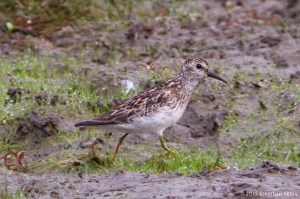
Saturday Bird Notes – Aug. 22, 2015

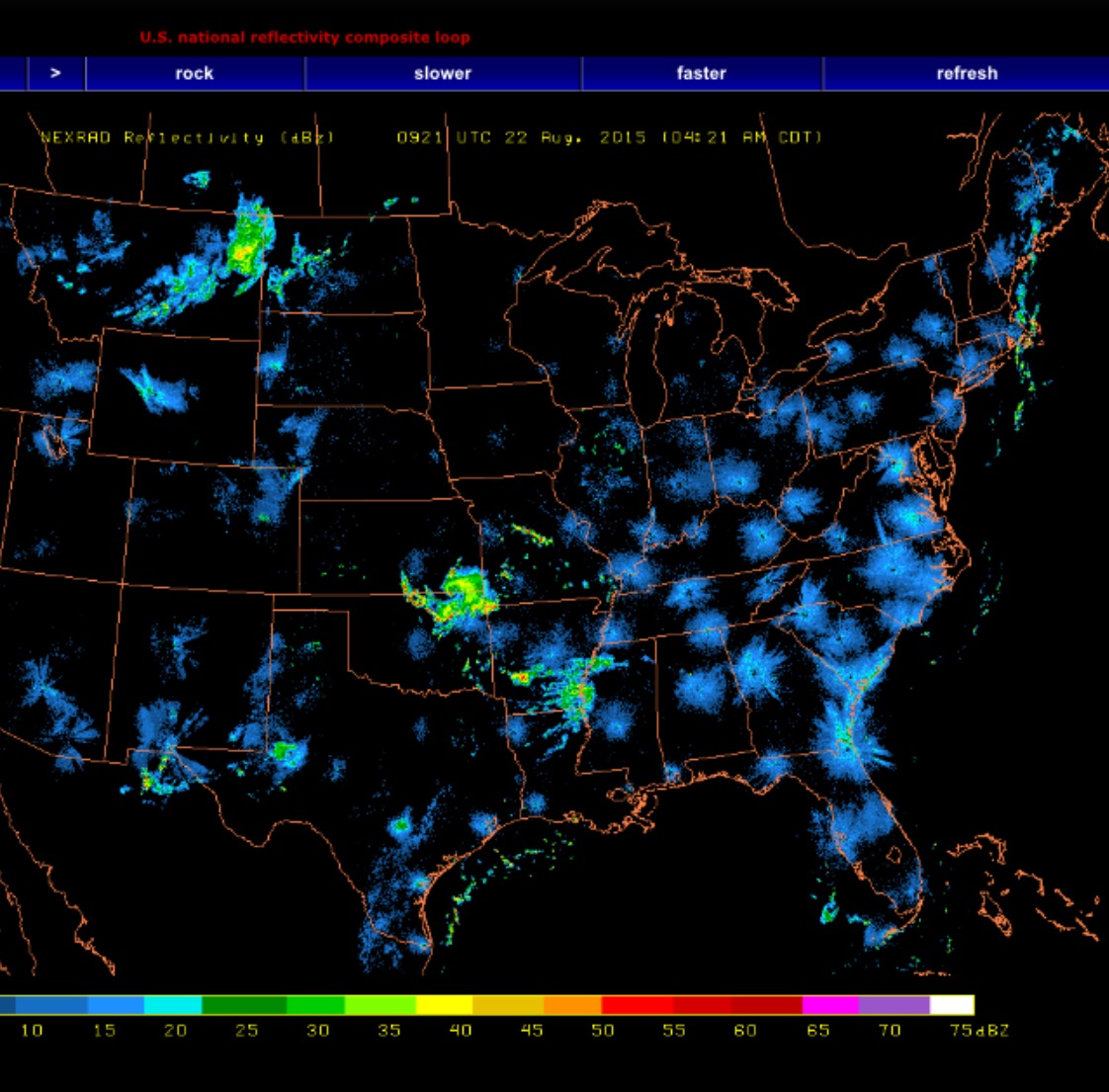
Bird Migration Radar, Aug. 22, 2015

Bird Migration Radar, Aug. 22, 2015

The bird migration radar looked promising at 5:45 this morning. One never knows where the birds will put down but migration traps are usually the best bet.


A Philadelphia Vireo and twelve warbler species were had at Chimney Rock (Jeff Ellerbusch, Simon Lane).


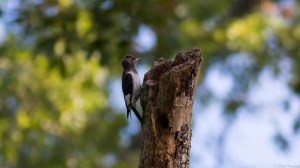
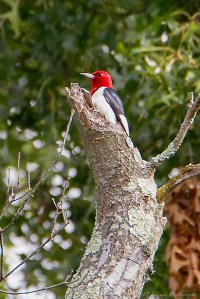
Nine warbler species were seen at Glenhurst Meadows as well as adult and juvenile Red-headed Woodpeckers (Chris Thomas).

Photos by Chris Thomas – click on the photo for a larger image.

Juvenile Red-headed Woodpecker (photo by Chris Thomas)

Juvenile Red-headed Woodpecker (photo by Chris Thomas)

Red-headed Woodpecker (photo by Chris Thomas)

Red-headed Woodpecker (photo by Chris Thomas)


30 Bobolinks were at The Tourne (Tim Vogel).


The feeders at home in Morris Township were half-filled this morning at 6:30  when this blogger went out for a morning walk. Upon returning at 9:45 AM, a look at the feeding station showed that birds weren’t the only creatures enjoying the black-oil sunflower seeds.

Squirrel-proof yes; bear-proof no.

Mangled bird feeder

Mangled bird feeder

Crushed feeding station

Crushed feeding station


View local eBird checklists in the mocosocoBirds region via eBird’s Region Explorer. Use the following links:

The eBird Hotspot Primer is here and can also be accessed via the Hotspot menu item on the mocosocoBirds.com website.


@mocosocoBirds at Twitter is another communications stream. Instant field reports and links of interest are tweeted throughout the day. The latest tweets appear on the sidebar of this page. One can follow mocosocoBirds at Twitter or link to @mocosocoBirds.


Finis


Posted in Morris County, Somerset County | Tagged , , , , , , , , | Leave a comment

Tricolored Heron, Caspian Terns, other Bird Notes – Aug. 18, 2015

Tricolored Heron at Lincoln Park Gravel Pits

A distant juvenile Tricolored Heron (TRHE) was observed this afternoon at the Lincoln Park Gravel Pits. TRHE is a rare visitor to Morris County. Interestingly,  no documented records from Somerset County are known. The location of the TRHE at the Lincoln Park Gravel Pits is impossible to describe unless one is intimately familiar with the place.

Also at The Pits are 4 Lesser Yellowlegs, 45 Least Sandpipers, 2 Semipalmated Sandpipers and the usual gathering of Killdeer.


Caspian Terns at Lake Musconetcong

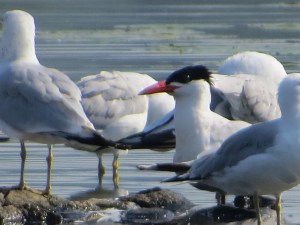
Caspian Tern, Lk. Musconetcong, NJ, Aug. 17, 2015 (photo by Alan Boyd)

Caspian Tern, Lk. Musconetcong, NJ, Aug. 17, 2015 (photo by Alan Boyd)

Two Caspian Terns at Lake Musconetcong on Aug. 17 is an excellent find by Alan Boyd. The lake has become a regular stopover for this species the past few years. Of course, the terns were gone as of this morning, Aug. 18.


Other Bird Notes

An Olive-sided Flycatcher was seen Aug. 15 at the overlook on Pleasant Plains Road, Great Swamp NWR (Simon Lane). This is only the third separate record of this species for 2015 in Morris County. There are none for Somerset County.


Red-headed Woodpeckers continue to be reported from Glenhurst Meadows, the latest on Aug. 15 when two were seen (Jeff Ellerbusch). Look for them by the river. You can probably see them on the Morris County side of the river by exploring the Long Hill Wetlands but be warned, this is bushwhacking country with a healthy population of Poison Ivy in many areas.


View local eBird checklists in the mocosocoBirds region via eBird’s Region Explorer. Use the following links:

The eBird Hotspot Primer is here and can also be accessed via the Hotspot menu item on the mocosocoBirds.com website.


@mocosocoBirds at Twitter is another communications stream. Instant field reports and links of interest are tweeted throughout the day. The latest tweets appear on the sidebar of this page. One can follow mocosocoBirds at Twitter or link to @mocosocoBirds.


Finis


Posted in Morris County, Somerset County | 1 Comment

Monday Bird Notes – Aug. 10, 2015

A Pine Siskin at a private feeder on Aug. 9 in Middle Valley, Washington Twp. (Alison Goesling) is an indicator that a shift in the species makeup of the local avifauna is slowly building in momentum.

Pine Siskin, Middle Valley, NJ, Aug. 9, 2015 (photo by Alison Goesling)

Pine Siskin, Middle Valley, NJ, Aug. 9, 2015 (photo by Alison Goesling)

A Canada Warbler visited a yard in East Hanover on Saturday, Aug. 8 (Chuck Hantis).

Canada Warbler, East Hanover, NJ, Aug. 8, 2015 (photo by Chuck Hantis)

Canada Warbler, East Hanover, NJ, Aug. 8, 2015 (photo by Chuck Hantis)

Northern Waterthrushes are reported almost daily.

Common Nighthawks are setting the stage for a big migration push later this month with singles seen at the Great Swamp NWR on Aug. 9 (Simon Lane) and one in Denville, Aug. 8 (Tim Vogel).

A storm front forecast for Tuesday could further shake the birds up a bit. For those of you lounging during this beautiful summer, it is time to get back to work and go birding.


View local eBird checklists in the mocosocoBirds region via eBird’s Region Explorer. Use the following links:

The eBird Hotspot Primer is here and can also be accessed via the Hotspot menu item on the mocosocoBirds.com website.


@mocosocoBirds at Twitter is another communications stream. Instant field reports and links of interest are tweeted throughout the day. The latest tweets appear on the sidebar of this page. One can follow mocosocoBirds at Twitter or link to @mocosocoBirds.


Finis


Posted in Morris County, Somerset County | Tagged , , , , , , , | 1 Comment

Friday Bird Notes, Aug. 7, 2015

Semipalmated Sandpiper, Lincoln Park Gravel Pits, NJ, Aug. 7, 2015 (photo by Jonathan Klizas)

Semipalmated Sandpiper, Lincoln Park Gravel Pits, NJ, Aug. 7, 2015 (photo by Jonathan Klizas)

(Click on the photo for a larger image.)

Shorebirds at the Lincoln Park Gravel Pits today include 2 Semipalmated Plovers, 16 Killdeer, 5 Greater Yellowlegs including 1 juvenile, 3 Semipalmated Sandpipers (adults) and 8 Least Sandpipers with 1 gorgeous juvenile.

On the previous day Roger Johnson added Black-crowned Night-Heron and Bobolink to The Pits’ year list.

Neighboring Walker Avenue Wetlands in Wayne, Passaic County has a diminished number of Great Blue Herons and Great Egrets with only 3 of the former and 4 of the latter today. Two weeks ago, the numbers of these two species were 26 and 30 respectively. 50+ Least Sandpipers, 10 Semipalmated Sandpipers, 4 Lesser Yellowlegs, 3 Spotted Sandpipers and 18 Killdeer are the today’s shorebird totals.

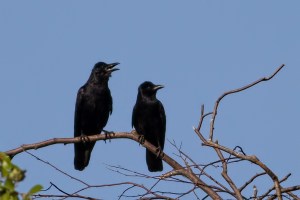
Fish Crows, Lincoln Park Gravel Pits, NJ, Aug. 7, 2015 (photo by Jonathan Klizas)

Fish Crows, Lincoln Park Gravel Pits, NJ, Aug. 7, 2015 (photo by Jonathan Klizas)


Rob Gallucci visited Glenhurst Meadows on Aug. 6. One of the few known Red-headed Woodpeckers in north New Jersey this summer continues. 3 Solitary Sandpipers, Green Heron and 2 Northern Waterthrushes were also observed.

Clicking on the photos below sends you to Rob’s Flickr page for a video of the species selected.

Red-headed Woodpecker, Glenhurst Meadows, NJ, Aug. 6, 2015 (photo by Robert Gallucci)

Red-headed Woodpecker, Glenhurst Meadows, NJ, Aug. 6, 2015 (photo by Robert Gallucci)

Solitary Sandpiper, Glenhurst Meadows, NJ, Aug. 6, 2015 (photo by Robert Gallucci)

Solitary Sandpiper, Glenhurst Meadows, NJ, Aug. 6, 2015 (photo by Robert Gallucci)


View local eBird checklists in the mocosocoBirds region via eBird’s Region Explorer. Use the following links:

The eBird Hotspot Primer is here and can also be accessed via the Hotspot menu item on the mocosocoBirds.com website.


@mocosocoBirds at Twitter is another communications stream. Instant field reports and links of interest are tweeted throughout the day. The latest tweets appear on the sidebar of this page. One can follow mocosocoBirds at Twitter or link to @mocosocoBirds.


Finis


Posted in Morris County, Somerset County | Tagged , , , , , , , | Leave a comment

Shorebirds, Purple Martins, Wednesday Bird Notes – Aug. 5, 2015

Shorebirds

Pectoral and Least Sandpipers, Lincoln Park Gravel Pits, NJ, Aug. 5, 2015 (photo by Jonathan)

Pectoral and Least Sandpipers, Lincoln Park Gravel Pits, NJ, Aug. 5, 2015 (photo by Jonathan

(Click on the photo for a larger image.)

7 shorebird species were at the Lincoln Park Gravel Pits this morning: 12 Killdeer, 1 juvenile Spotted Sandpiper, 2 Solitary Sandpipers, 1 Greater Yellowlegs, 2 Lesser Yellowlegs, 8 Least Sandpipers and the first Pectoral Sandpiper reported in either Morris or Somerset Counties in 2015. 12 Great Blue Herons, 8 Great Egrets and 8 Green Herons were also at The Pits.

Neighboring Walker Avenue Wetlands in Wayne, Passaic County added 2 Semipalmated Plovers and 5 Semipalmated Sandpipers to the Pompton River Wetlands Area list.

Pectoral and Solitary Sandpipers, Lincoln Park Gravel Pits, NJ, Aug. 5, 2015 (photo by Jonathan)

Pectoral and Solitary Sandpipers, Lincoln Park Gravel Pits, NJ, Aug. 5, 2015 (photo by Jonathan)


Purple Martins in the Great Swamp NWR

Purple Martins, Great Swamp NWR, NJ, Aug. 3, 2015 (photo by Chuck Hantis)

Purple Martins, Great Swamp NWR, NJ, Aug. 3, 2015 (photo by Chuck Hantis)

A Purple Martin condominium debuted successfully this year at the Great Swamp Headquarters on Pleasant Plains Road. A second condo was recently erected near the Helen C. Fenske Visitor Center ensuring Purple Martins in the area for summers to come.

Purple Martins, Great Swamp NWR, NJ, June 24, 2015 (photo by Jonathan  Klizas)

Purple Martins, Great Swamp NWR, NJ, June 24, 2015 (photo by Jonathan Klizas)

If you think luring Purple Martins to artificial structures is a development since the European invasion of the Americas, read the following article at the Purple Martin Conservation Association web site: Thanks to Native Americans, Purple Martins Underwent a Complete Tradition Shift.


View local eBird checklists in the mocosocoBirds region via eBird’s Region Explorer. Use the following links:

The eBird Hotspot Primer is here and can also be accessed via the Hotspot menu item on the mocosocoBirds.com website.


@mocosocoBirds at Twitter is another communications stream. Instant field reports and links of interest are tweeted throughout the day. The latest tweets appear on the sidebar of this page. One can follow mocosocoBirds at Twitter or link to @mocosocoBirds.


Finis


Posted in Morris County, Somerset County | Tagged , , , , , , , , , | Leave a comment

Friday Bird and Butterfly Notes – July 31, 2015

Nymphaea odorata, Timberbrook Lake, July 31, 2015 (photo by Jonathan Klizas)

Nymphaea odorata, Timberbrook Lake, July 31, 2015 (photo by Jonathan Klizas)

(Click on the photo for a larger image.)

July 31: another flip of the monthly calendar as summer moves into a more intense southbound migration phase.

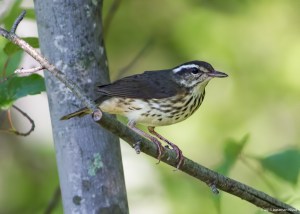
A pair of Louisiana Waterthrushes remain at Timberbrook Lake in the highlands of Rockaway Township. One sang loudly as if it was April.

Louisiana Waterthrush, Timberbrook Lake, NJ, July 31, 2015 (photo by Jonathan Klizas)

Louisiana Waterthrush, Timberbrook Lake, NJ, July 31, 2015 (photo by Jonathan Klizas)


At the Great Swamp NWR, Simon Lane reports Barn, Tree, Bank, Cliff, Northern Rough-winged Swallows and Purple Martins on the move as well as 20 Eastern Kingbirds and Least Flycatcher.


From Mike Newlon at Glenhurst Meadows:
“Only cicadas are singing – even the Indigo Bunting and Field Sparrows have quit. Swamp hibiscus in full bloom. Only bird of note: a Woodcock flushed from the trail between the ponds. A big patch of Purple Loosestrife in the southeast corner is attracting butterflies – including a very fresh Horace’s Duskywing and Zabulon Skipper. 16 species of butterflies total.”


The same 25-30 Great Egrets, 20+ Great Blue Herons, 30 Killdeer and Least Sandpipers continue to work the Lincoln Park Gravel Pits and, especially, neighboring Walker Avenue Wetlands in Passaic County. A few butterflies on July 28 broke the routine. Incidentally, if last year is any indication, the Pits will soon have impressive numbers of Viceroys.

Variegated Fritillary, Lincoln Park Gravel Pits, NJ, July 28, 2015 (Jonathan Klizas)

Variegated Fritillary, Lincoln Park Gravel Pits, NJ, July 28, 2015 (Jonathan Klizas)

Viceroy, Lincoln Park Gravel Pits, NJ, July 28, 2015 (photo by Jonathan Klizas)

Viceroy, Lincoln Park Gravel Pits, NJ, July 28, 2015 (photo by Jonathan Klizas)


View local eBird checklists in the mocosocoBirds region via eBird’s Region Explorer. Use the following links:

The eBird Hotspot Primer is here and can also be accessed via the Hotspot menu item on the mocosocoBirds.com website.


Posted in Morris County, Somerset County | Tagged , , , , , , , , , | Leave a comment

Weekend Bird and Butterfly Notes – July 26, 2015

Bird Notes

These are summer’s light times on the local birding front. Song is diminishing. Young birds abound. Southbound migration is underway. Shorebirds such as Greater and Lesser Yellowlegs and Least Sandpipers are present in the proper habitats.

Butterflies

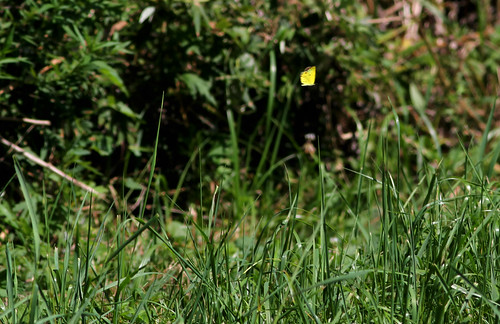
A Little Yellow was found by Jeff Ellerbusch at Finderne Wetlands on Friday, July 24. This is the first documented Little Yellow in the 21st century for Somerset County. Jeff was fortunate to fire off a few exposures as the butterfly flew by rapidly and out of view. The photo is good enough for a positive identification.

Little Yellow
(Click on the photo for a larger image.)

The best online resource for New Jersey butterflies is the website maintained by the North American Butterfly Association’s North Jersey Butterfly Club. The main link for that site is here.


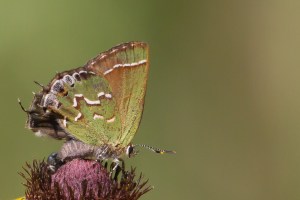
Yesterday, July 25 at Duke Farms, Mike Newlon photographed a Juniper Hairstreak and a Giant Swallowtail.

Juniper Hairstreak, Duke Farms, NJ, July 25, 2014 (photo by Mike Newlon)

Juniper Hairstreak, Duke Farms, NJ, July 25, 2014 (photo by Mike Newlon)

Giant Swallowtail, Duke Farms, NJ, July 25, 2014 (photo by Mike Newlon)

Giant Swallowtail, Duke Farms, NJ, July 25, 2014 (photo by Mike Newlon)


View local eBird checklists in the mocosocoBirds region via eBird’s Region Explorer. Use the following links:

The eBird Hotspot Primer is here and can also be accessed via the Hotspot menu item on the mocosocoBirds.com website.


@mocosocoBirds at Twitter is another communications stream. Instant field reports and links of interest are tweeted throughout the day. The latest tweets appear on the sidebar of this page. One can follow mocosocoBirds at Twitter or link to @mocosocoBirds.


Finis


Posted in Morris County, Somerset County | Tagged , , , , , , , , | Leave a comment

The Pits and Walker Ave. Wetlands – July, 23, 2015


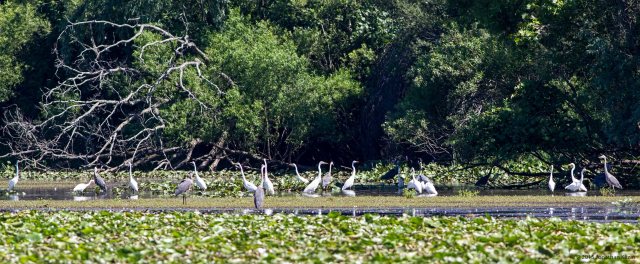
Egrets and Herons, Walker Ave. Wetlands, NJ, July 23, 2015 (photo by Jonathan Klizas)

Egrets and Herons, Walker Ave. Wetlands, NJ, July 23, 2015 (photo by Jonathan Klizas)

The Lincoln Park Gravel Pits (The Pits) has a long history in Morris County birding, especially in the 20th century decades of the 60’s and 70’s. Accessibility is a major problem since the 1980’s . Currently, The Pits are treated as private. The only known public access is available on the berm separating the swim club and the water chestnut clogged lake of The Pits in the western section, although this is not easy to find or to get to. Otherwise, if you wish to visit The Pits, this territory falls under the categorical phrase mentioned many times in this space: “You are on your own.”

The southern part of The Pits borders on the Pompton River which forms the boundary between Morris and Passaic Counties. Directly on the south side of the Pompton River and across from The Pits is a gem known as the Walker Avenue Wetlands (Walker Ave.) in the township of Wayne. Granted, this is in Passaic County and mocosocoBirds focuses on Morris and Somerset Counties but The Pits and Walker Ave. are joined at the river, so to speak. It is unfair to think of one without the other. This observer on many occasions has watched herons, egrets, shorebirds, etc. fly south over the southern treeline of The Pits, more than likely headed for Walker Ave.

The eBird hotspot for Walker Ave. lists 184 species. The link for the hotspot is here. A Reeve (the term for a female Ruff) was here during the summer of 2002 propelling Walker Ave. into the New Jersey birding consciousness. Stilt, Baird’s and Buff-breasted Sandpipers along with Wilson’s Phalarope have also been recorded at Walker Ave. Viewing the eBird hotspot will show the reader an impressive species list for this location.

Use Walker Avenue in Wayne to access the wetlands. Park at the end of the road and explore. This morning, after wondering where the Great Blue Herons and Great Egrets that were seen in double-digits at The Pits  the past week had gone, a trip to Walker Ave. showed they had moved to Passaic County.  30 Great Egrets and 26 Great Blue Herons were in the northeast section of the wetlands in the late morning. The above photo shows approximately half of them. Also present were Green Herons, Wood Ducks, an immature Bald Eagle flying low over the wetlands, which the herons and egrets ignored, Lesser Yellowlegs, Least Sandpiper, etc.

The screenshot of a map below shows the general layout of The Pits and Walker Ave. and the human congestion surrounding the area creating an oasis effect.

Pits and Walker Ave


View local eBird checklists in the mocosocoBirds region via eBird’s Region Explorer. Use the following links:

The eBird Hotspot Primer is here and can also be accessed via the Hotspot menu item on the mocosocoBirds.com website.


@mocosocoBirds at Twitter is another communications stream. Instant field reports and links of interest are tweeted throughout the day. The latest tweets appear on the sidebar of this page. One can follow mocosocoBirds at Twitter or link to @mocosocoBirds.


Finis


Posted in Morris County, Somerset County | Tagged , , , , , , , | Leave a comment

Birds and Water Chestnut (Trapa natans) – July 18, 2015

Water Chestnut (Trapa natans)
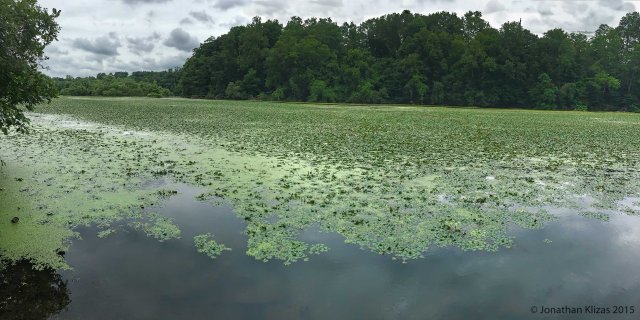
Speedwell Lake, Morristown, NJ, July 15, 2015 (iPhone pano by Jonathan Klizas)

Speedwell Lake, Morristown, NJ, July 15, 2015 (iPhone pano by Jonathan Klizas)

(Click on the photo for a larger image.)

Readers may be unaware of this suffocating invasive, but Water Chestnut is quickly taking over selected ponds and lakes in Morris County as well as many locations in the northeastern United States.

This is not the same Water Chestnut used in Asian-style cuisine. This is a plant, that if gone unchecked, could become the aquatic equivalent of Kudzu. Read on.

Here is a brief history of the plant in New England, quoted from the Invasive Plant Atlas of New England web site:

“Sometime before 1879, Trapa natans was intentionally planted by a gardener at the Cambridge botanical garden in Fresh Pond, Cambridge, MA. This gardener reported planting it in other ponds as well. It was also distributed up to Concord, MA, where it was planted in a pond near the Sudbury River. By 1899, it was extremely invasive in the pond and the river, and needed to be pulled out. There is an 1859 record from Concord, MA, but notes on the specimen and from the New England Botanical Club indicate that this date is in error, and that it was actually from 1879. By 1920, Trapa natans had reached western Massachusetts. Since then, it has spread into Lake Champlain in Vermont, the Nashua River in New Hampshire (1998) and most recently the Connecticut River in Connecticut in 1999. Any area that is downstream of these incursion sites is threatened.”

It has spread into New York, New Jersey, Delaware and elsewhere. As the above photo from Speedwell Lake shows, Trapa natans becomes a thick mat, blanketing the surface of an entire body of water, sucking the oxygen and nutrients from the water and suffocating any other vegetation in its domain. The mats it creates severely limits light penetrating the water creating a negative effect for the health of the aquatic ecosystem.

Speedwell Lake in Morristown is a dammed section of the Whippany River. It has historical significance as well. Alfred Vail ran an ironworks here in the 19th century. It was at his homestead, part of what is now Speedwell Village, that Vail and Samuel Morse first demonstrated the electric telegraph.

Of course, since Speedwell Lake is part of the Whippany River, seed pods from this invasive can travel downstream. The Whippany River merges with the Rockaway River in Parsippany, soon connecting with the Passaic River, etc.

Most of Speedwell Lake is now covered with Water Chestnut. As far as this observer can remember, this has occurred in the past five years or less.

Lake Musconetcong has been fighting this invasive plant with hand-pulling events and special dredging machines. Lake Hopatcong has alerted the populace to be aware of this invader. Both of these locations are lake communities with many watchful eyes and dedicated volunteers working to rid their waters of Water Chestnut.

What about the hidden ponds and out-of-the way lakes? Melanie Lane Wetlands, a productive waterfowl, shorebird, heron and egret spot, but known to only a few people, is currently obliterated with Water Chestnut as well as being walled in by a state highway on one side and an office complex including a professional soccer team’s practice facility, on the other. Coincidence or not, it is an offshoot of the Whippany River downstream from Speedwell Lake in Morristown.

The photo below shows the current state of what was once referred to as Melanie Lane Pond. Most of the Water Chestnut coverage has occurred in the past two to three years illustrating how quickly this plant can dominate a body of water.
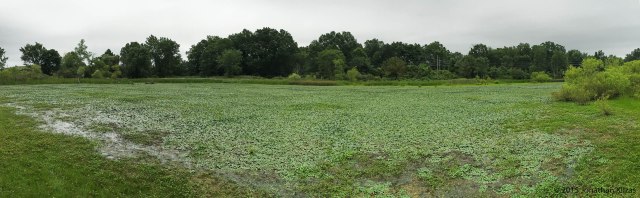
Melanie Lane Wetlands, NJ, July 18, 2015 (iPhone pano by Jonathan Klizas)

Melanie Lane Wetlands, NJ, July 18, 2015 (iPhone pano by Jonathan Klizas)

The larger lake at the Lincoln Park Gravel Pits is undergoing the same calamity. Only local residents and fishermen, a small hunt club and a very few birders know of this location. It is private property and doubtful the owner knows of, or has any interest in, managing the Water Chestnut invasion.

How do birds fare with the green mat? Some do quite well based on recent observations. Last summer, the Little Blue Herons and Green Herons of Lincoln Park and Melanie Lane feasted on the frogs and other creatures that use the Water Chestnut mat for their own purpose.

Wood Ducks seem to feel comfortable with Water Chestnut especially when the young ducklings use the vast mat for cover. Double-crested Cormorants will feed anywhere.
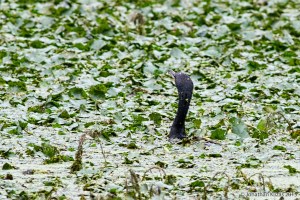
Double-crested Cormorant, Speedwell Lake, NJ, July 15 2015 (photo by Jonathan Klizas)

Double-crested Cormorant, Speedwell Lake, NJ, July 15 2015 (photo by Jonathan Klizas)

One species that seems to be a constant at the Morris County Water Chestnut locations is the Cedar Waxwing as they have taken a considerable liking to the floating mats. Each location that this observer has visited has had up to 15 Cedar Waxwings catching insects off of the leaves. Red-winged Blackbirds, Swallow spp. and other species typical to a swamp/marsh habitat are utilizing the source.
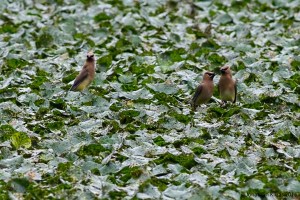
Cedar Waxwings, Speedwell Lake, Morristown, NJ, July 15, 2015 (photo by Jonathan Klizas)

Cedar Waxwings, Speedwell Lake, Morristown, NJ, July 15, 2015 (photo by Jonathan Klizas)

And, of course, certain mammals enjoy the endless aquatic salad bar, as well. Three other deer nearby were also enjoying the invasive repast when the following photo was shot. What is not illustrated by these photographs is the cumulative negative effect this plant has on the entire ecosystem.

Deer, Lincoln Park Gravel Pits, NJ, July 17, 2015 (photo by Jonathan Klizas)

Deer, Lincoln Park Gravel Pits, NJ, July 17, 2015 (photo by Jonathan Klizas)

Advertising animal adjustments to a new habitat does not intend to minimize the Water Chestnut issue. It is becoming a larger problem year-by-year and needs to be monitored and mitigated.

Report sightings of Water Chestnut to the following Rutgers contact:
Rutgers Cooperative Extension of Morris County

Here is a quick guide to the invasion, written by the NJ Water Chestnut Task Force in 2010:
Water Chestnut: An Emerging Aquatic Invasive Species in New Jersey

Here is another sobering thought. The U.S. Fish and Wildlife’s Conservation in a Changing Climate states that southern plants may soon migrate north. Kudzu cannot tolerate winter frosts. But if those northeastern winters change for the warmer, even by a few degrees… (If the reader is unfamiliar with Kudzu in the southeastern United States, perform an Internet search to get a taste of the devastation a single plant species can cause).


View local eBird checklists in the mocosocoBirds region via eBird’s Region Explorer. Use the following links:

The eBird Hotspot Primer is here and can also be accessed via the Hotspot menu item on the mocosocoBirds.com website.


@mocosocoBirds at Twitter is another communications stream. Instant field reports and links of interest are tweeted throughout the day. The latest tweets appear on the sidebar of this page. One can follow mocosocoBirds at Twitter or link to @mocosocoBirds.


Finis

Posted in Morris County, Somerset County | Tagged , , , , , , , , , | 2 Comments

Shorebirds – July 17, 2015

Morris

Least Sandpiper, Lincoln Park, NJ, July 17, 2015 (photo by Jonathan Klizas)

Least Sandpiper, Lincoln Park, NJ, July 17, 2015 (photo by Jonathan Klizas)

(Click on the photo for a larger image.)

It is not necessary to be on the coast to know that the southward migration of shorebirds has begun.  The modest Morris County shorebirding season started today with 5 Least Sandpipers, 8 Lesser Yellowlegs (they came as a group one minute and were gone the next), and 18 Killdeer at the Lincoln Park Gravel Pits. Wading birds are represented by 7 Great Blue Herons, 4 Great Egrets and 4 Green Herons.


Somerset

From Mike Hiotis, yesterday July 16:
“Had a Solitary Sandpiper at Skillman Park, Montgomery this morning (south side). Also, along Skillman Lane was one Semipalmated Plover in with a number of Killdeer.”


Information

Below is a link for an eBird generated bar graph for inland counties of northern New Jersey. Inland is defined by counties north of Trenton and west of any counties that touch the eastern border of the state and includes Sussex, Warren, Hunterdon, Mercer, Somerset, Morris and Passaic. The point of the graph is to see what shorebird and wading bird species can be expected in the north-central and north-west parts of the state for the remainder of July.

Note: the graph shows all species recorded in eBird only during July. Scroll down to view shorebird occurrences. The link is here.

Based on the bar graph and recent history of species reported, some of the migrants and wanderers in the wading bird and shorebird categories that could be seen to the end of July are listed below:

Little Blue Heron
Semipalmated Plover
Solitary Sandpiper
Greater Yellowlegs
Lesser Yellowlegs
Least Sandpiper
Pectoral Sandpiper
Semipalmated Sandpiper

Caspian, Common and Forster’s Terns are always a possibility, as well.


View local eBird checklists in the mocosocoBirds region via eBird’s Region Explorer. Use the following links:

The eBird Hotspot Primer is here and can also be accessed via the Hotspot menu item on the mocosocoBirds.com website.


@mocosocoBirds at Twitter is another communications stream. Instant field reports and links of interest are tweeted throughout the day. The latest tweets appear on the sidebar of this page. One can follow mocosocoBirds at Twitter or link to @mocosocoBirds.


Finis

Posted in Morris County, Somerset County | Tagged , , , , , , , , | Leave a comment